Focused on making STEM more approachable – IRL and online
March 4, 2026
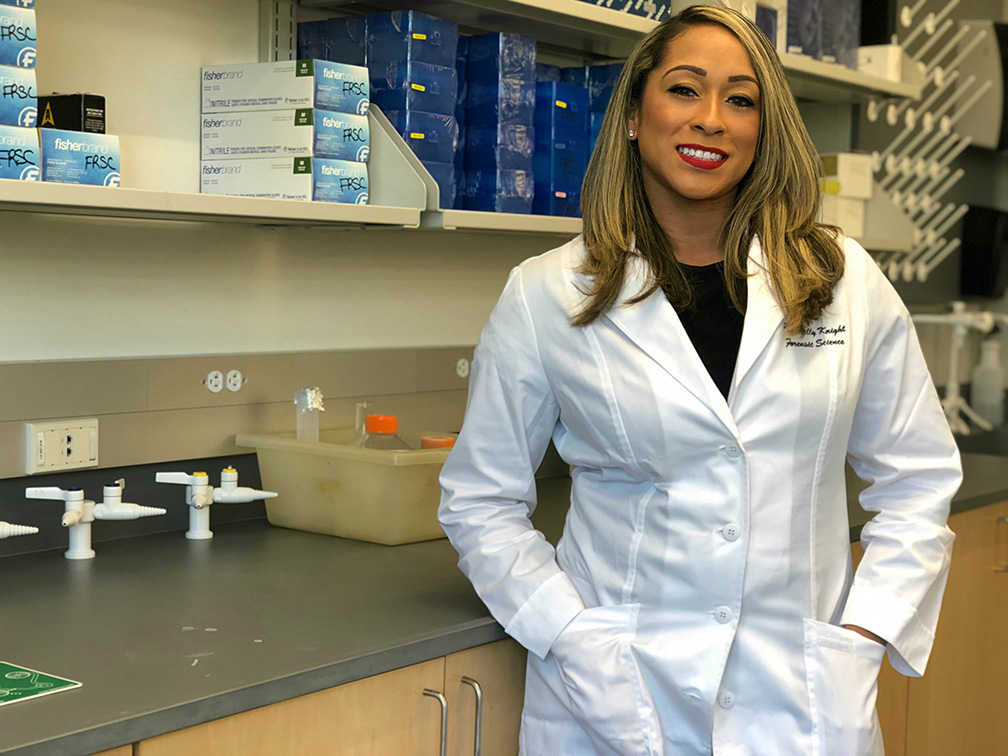
Kelly Knight (M.S.’08) discovered her knack for teaching while serving as a forensic science expert in legal trials. As she laid out information in an accessible way for juries to understand, she realized this type of communication was transferable from the courtroom to the classroom. She currently serves as a professor of forensic science and STEM accelerator at George Mason University’s College of Science.
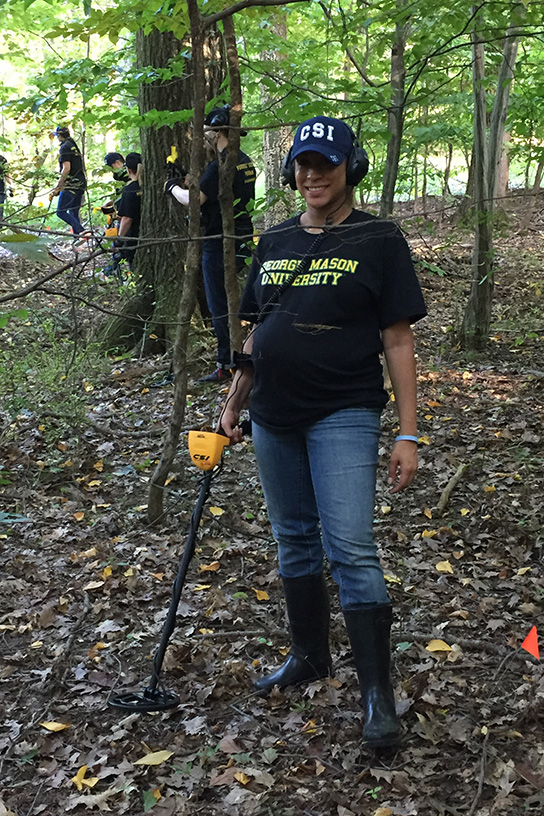
Knight’s reach as an educator also extends outside of her university into the local community and online. As the co-founder of Females of Color and those Underrepresented in STEM (FOCUS), Knight directs STEM summer programs for middle and high school girls. She is also known as Kelly the Scientist by her social media followers, that number in the tens of thousands, where she shares her career journey.
What drew you to VCU?
 VCU was actually the only graduate school I applied to. I was immediately drawn to the program because of the impressive faculty and resources. The degrees offered by the VCU Department of Forensic Science are truly the blueprint. They were one of the first departments to have such a robust forensic science curriculum and they have a legacy of producing amazing scholars. That is why I knew I wanted to pursue my degree at VCU.
Was there a faculty member that made a particular impact on your education and/or career journey? How so?
Tracey Dawson Green, Ph.D., has made the most significant impact on my education and my career over the last two decades. I was initially waitlisted for admission to the program, but my life was forever changed by the first phone conversation I had with Dr. Green, who told me I would be admitted. We talked about her research lab and she encouraged me to apply for a position, something I would have never considered had she not suggested it. I started working in her lab as a research associate, and I not only gained critical skills for my career but also a lifelong mentor. Dr. Green is someone whom I have always looked up to and aspired to be like, so much so that I am now a professor myself and started my own DNA research lab where I can give back to students in the same way she supported me.
After graduating from VCU, what inspired you to pursue a role with the Maryland State Police Forensic Science Division? What was the transition like from the classroom to working in a police lab?
I always aspired to work in a lab that was near my home and I grew up in Maryland, so the Maryland State Police was definitely at the top of my list. The location was perfect, but even more importantly, it was a brand-new lab at the time, full of amazing scientists doing great work. I knew I wanted to work there.
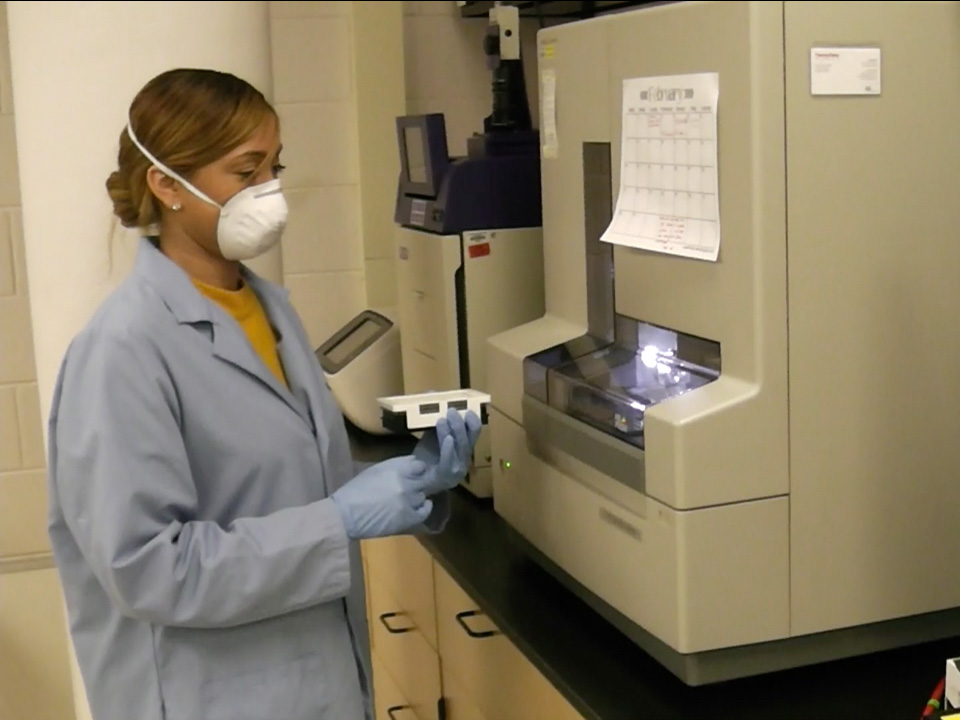
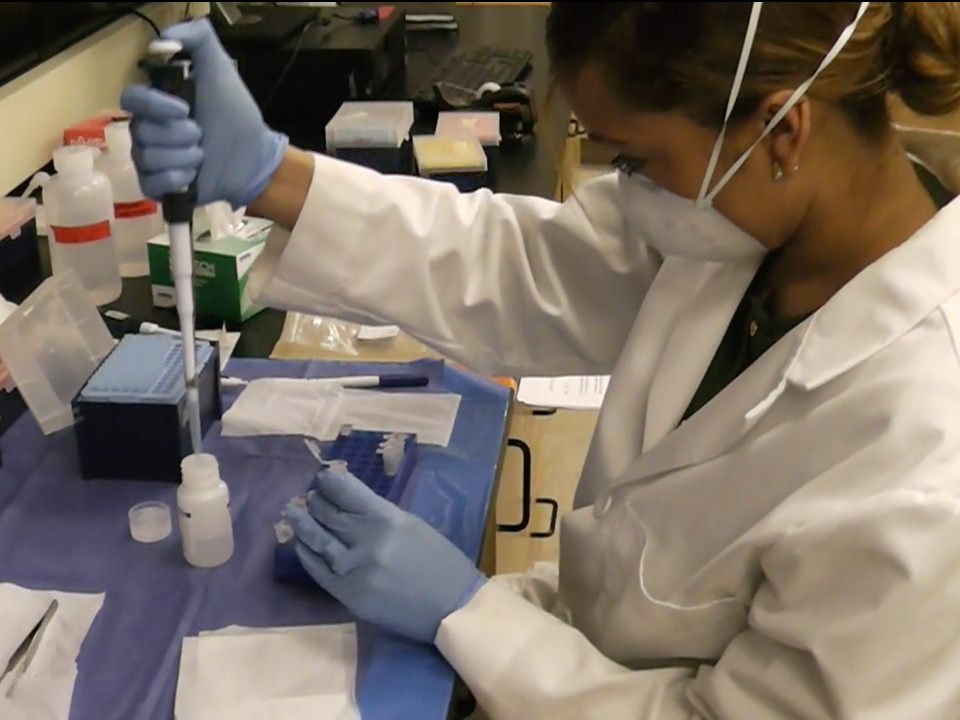
There was definitely a learning curve, as I expected, but I felt incredibly prepared thanks to the knowledge and training I gained as a student at VCU. My work as a student, especially my time working in Dr. Green's research lab, prepared me for the different types of evidence, equipment and techniques I would work with on a day-to-day basis.
 In your personal bio, it states you found a spark in teaching while serving as a qualified forensic science expert in court trials and leading tours as the laboratory tour coordinator. What aspects of those roles helped launch the next step of your career path?
In those roles, I learned how much I enjoyed teaching others about forensic science. I loved finding ways to break down complex content into manageable pieces that anyone could understand. Learning that about myself led me to try teaching in the classroom, so I started my teaching career as an adjunct professor while I was still working in the lab. I loved it so much that when I left the lab, I pursued a full-time teaching opportunity.
You are the co-founder and director of Females of Color and Those Underrepresented in STEM programs (FOCUS). What has it meant to you to shape FOCUS which creates more and more opportunities for middle and high school-aged women and women of color to be exposed to STEM fields?
As a woman of color myself, the opportunity to lead this program over the last 10+ years has meant everything to me. I always wished there was a program like FOCUS that existed when I was in middle and high school, so to have the opportunity to curate STEM experiences for these young STEM minds feels like such a meaningful way to give back and to help support and empower the future of STEM. I am impressed each summer by the brilliance these students exhibit during the program, and I am grateful to play just a small role in their journey.
You’ve created the online alter ego Kelly the Scientist with a massive following across social media. What has it been like to be an influencer in the science community? What was the most fulfilling part of creating scientific content for social media?
 Creating science content online has been both fulfilling and challenging. It has given me another way to connect with individuals from all over the world but being vulnerable and transparent as a scientist with thousands of people I don't know has been an interesting journey. I originally started my page just to share interesting science in a fun way. That turned into me sharing more about myself and my journey in science and before I knew it, I was getting tons of messages from people saying I had inspired them to pursue STEM or to stay in the field or to consider forensic science. That is not something I expected, but it has meant so much to me to know that there are other people out here who connect with my story and can use it as a guidepost to keep pursuing their dreams.
In addition to teaching at George Mason, you're also pursuing your Ph.D. What are the challenges or unique aspects of pursuing a Ph.D. while also serving as a faculty member?
Whew, where do I begin? I've said many times over the last few years that I want to write a book or article about this experience because it's been a wild ride. It is a strange feeling to go from teaching a class as an expert at 1:30 p.m. to going into a class as a Ph.D. student still learning a new field at 4:30 p.m. That has also been one of the best parts of being both a Ph.D. student and a professor because I deeply understand the student experience in a way that I didn't before.
Before beginning my Ph.D., I remembered what it was like as a student, but experiencing what I like and dislike as a student concurrently has allowed me to make immediate changes in my own classes as a professor. This was particularly powerful during COVID because I started my Ph.D. in the spring 2020 semester when the pandemic started. The COVID experience for students, especially those starting new programs, was unique and one that many faculty could not relate to directly. Taking classes at that time gave me important insights into different ways to modify my classes so my students could succeed.
 Reflecting on your time at VCU, how do you feel your time on campus helped prepare you to accomplish the work you’ve done so far in your career?
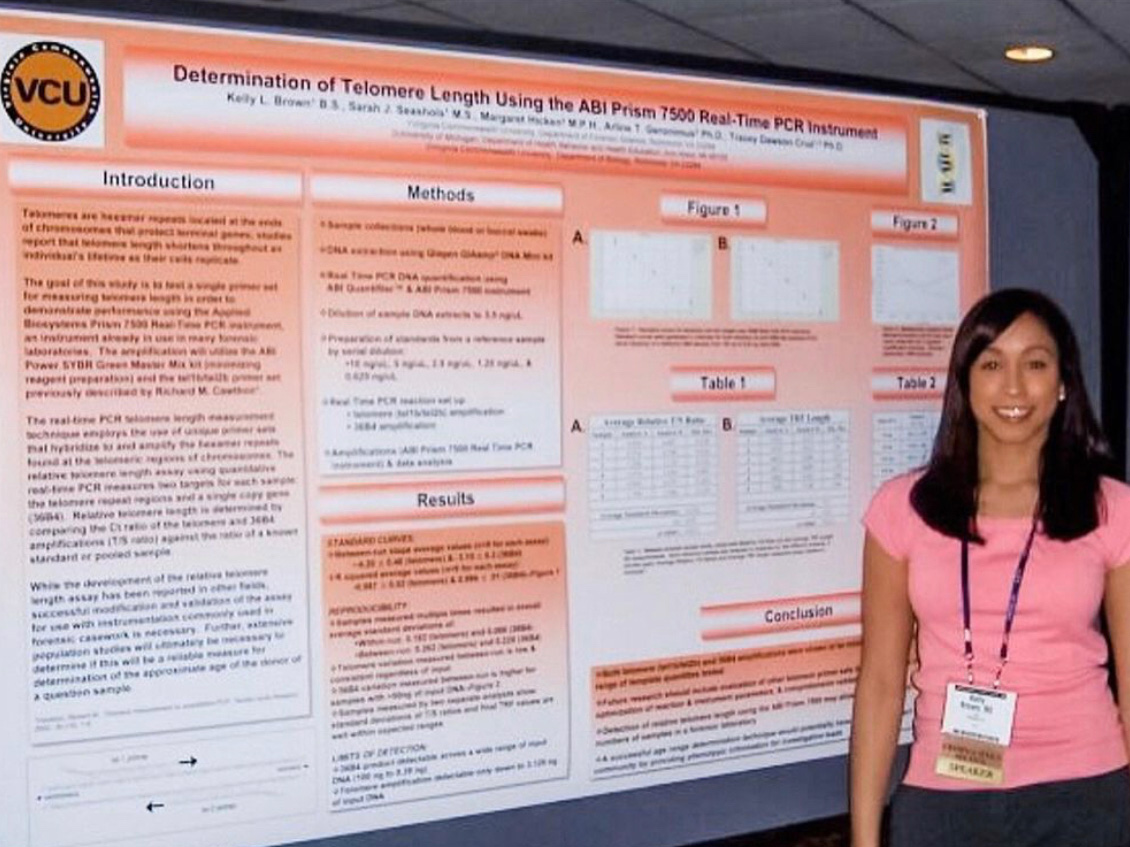
I've alluded to this in some of my previous answers, but I am confident I wouldn't be where I am today had I not attended VCU. The most important component of my experience at VCU was the relationships I built with faculty and classmates, many of whom I am still in contact with today and who are leaders in forensic science. The Department of Forensic Science at VCU ensured we were not only academically prepared but also provided the hands-on and professional experience we needed to step into any crime lab and work as scientists. They encouraged us to present our research and travel to conferences. These experiences put me in front of key decision-makers in the field, several of whom I would go on to interview and receive job offers from.
What’s your why?
I would say there are two prongs to my "why". The first is that the work I do both as a forensic scientist and as a professor deeply fulfills me. In these roles, I feel I am contributing to something greater than myself by engaging in reliable science that impacts others and by helping train future generations to do the same. The other prong is the example I am setting for my children and for others who look up to me. I hope they see me working hard to achieve my goals and are inspired to do the same.